Studying human psychology is always interesting, but it gets even more intriguing when we look at the mindset of Malays, especially those in Malaysia. Here, the definition of “Malay” is different from what you might find on Wikipedia or in a typical dictionary. In Malaysia, being Malay is both a legal and cultural identity. A Malay is a citizen who speaks Bahasa Melayu fluently, follows Malay customs, and, most importantly, is Muslim.
However, some far-left “intellectuals” often criticize Malays who prefer to support their cultural and national identities. They accuse these Malays of promoting supremacy, even as they call themselves “moderates.” To make sense of this contradiction, it’s important to understand Malaysia’s political spectrum and see where the left, right, and center actually stand.
On the far-left is the Pakatan Harapan (PH) movement. Their main beliefs are rooted in liberalism and socialism, but they still claim to represent the moderate middle. PH often uses emotional appeals, describing Malay and Islamic ideas from their opponents as outdated. At the same time, PH’s own left-wing approach relies on class conflict. They use slogans that stir up resentment, encouraging the lower-income B40 group to oppose the wealthier T20 group. This tactic is effective because the B40 group is much larger than the T20.
PH also strongly supports a Western-style liberal ideology, pushing for absolute freedom of speech and progressive agendas like LGBTQ rights, which do not always fit with local values.
On the other side, the far-right Perikatan Nasional (PN) bloc is led mainly by the Islamic party PAS. PN strongly supports an ultraconservative view of Malay and Islamic identity. They want to bring Islamic Sharia law into the country’s Civil Law. Surprisingly, they also see themselves as moderates, pointing to their readiness to work with “like-minded” non-Bumiputera groups.
To use a clothing analogy, the far-left (PH) is like someone insisting on the right to wear almost nothing, while the far-right (PN) wants everyone to wear a niqab and dress very conservatively.
So, who are the real moderates? The answer is Barisan Nasional (BN), the coalition that most Malaysians have known since independence.
BN was first formed as the Alliance Party to gain independence from the British. Early leaders built it on a model that brought UMNO, MCA, and MIC together to govern as a team. Even with this strong foundation, opposition groups often try to change the story. PAS tells its followers that BN is controlled by Western ideas and claims that only they are the true freedom fighters who can “liberate” Malaysia.
Despite these challenges, BN has stayed true to its main principles. Its core beliefs are nationalism, loyalty to Malays and Bumiputeras as the founding groups, upholding Islam as the country’s religion, and encouraging strong patriotism.
BN stands in the center as the real moderate, avoiding both the socialist liberalism of PH and the extreme conservatism of PAS. BN supports strong Malay nationalism, but always within the limits of reality and the law. BN follows Article 153 of the Federal Constitution, which requires protecting the special position of Malays and natives of Sabah and Sarawak, while also protecting the “legitimate interests of other communities”.
This balance in the Constitution is what true moderation looks like. BN supports the rights of everyone within fair and culturally suitable limits, such as aiming for 30% women’s leadership, while also protecting the country from outside ideas that do not fit.
If you want proof of BN’s moderation, just look at its economic record. By handling complex racial and religious issues in a practical way, BN turned Malaysia from a farming country into a modern powerhouse. Under BN, Malaysia grew by about six to seven percent each year, leading to major projects like Kuala Lumpur International Airport (KLIA) and the Vision 2020 plan. Neither the far-left nor the far-right has shown they can achieve this kind of stable and inclusive growth.
The biggest irony in PH and PN’s claims to moderation is how they treat BN. Malaysian voters can be easily influenced by changing moods, sometimes forgetting the country’s stability and the real reasons behind their votes. Both PH and PN say they campaign on “ideas,” but most of the time they just criticize each other, which puts voters on the defensive.
Since BN is firmly in the middle, how PH and PN talk about BN depends on who needs BN’s support. If BN gets closer to PH, PH suddenly praises BN’s leadership, while PN calls them traitors to Islam. If BN moves toward PN, then PN praises BN as defenders of the faith, and PH criticizes them as corrupt conservatives.
This back-and-forth hypocrisy says it all. Just by looking at this behavior, it’s clear who truly holds the “moderate middle ground” in Malaysia.
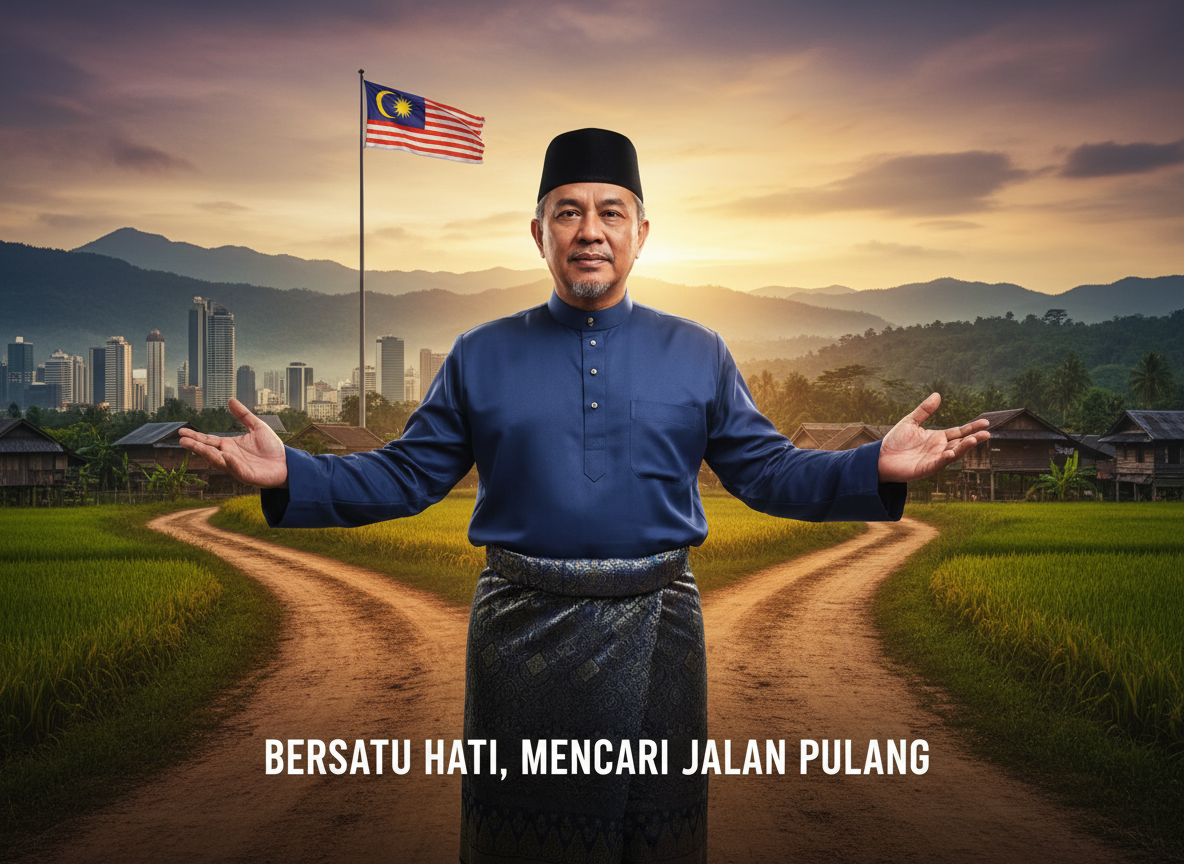
The only coalition that does not need to pretend to be in the center is the one that has always been there. Malaysia is a unique country that needs a special balance: strong Malay and Islamic nationalism, matched by a constitutional promise of fairness, economic growth, and representation for all races.
Looking ahead, Barisan Nasional is not just a choice based on tradition; it is necessary. For Malaysia to stay stable, grow, and remain strong, BN is the only logical coalition to support.
Leave a Reply